Too Much Signal, Too Little Action: How Real-Time Visibility Tools Are Slowing Procurement Down
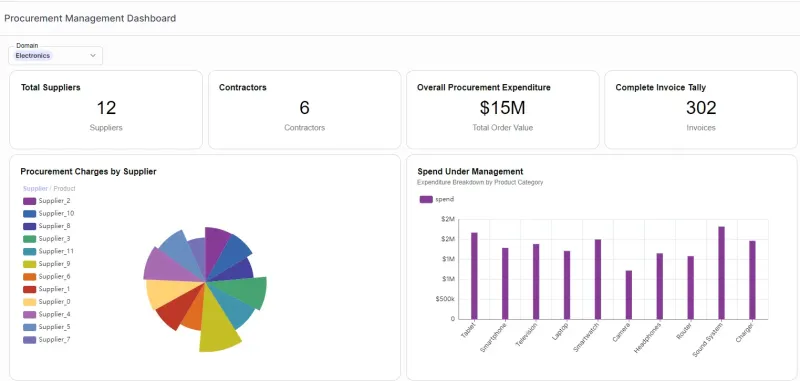
Photo: procurement manager analyzing data dashboard in manufacturing office, via cdn.prod.website-files.com
The Promise That Came With a Hidden Cost
When supply chain visibility platforms entered the mainstream procurement conversation, the pitch was straightforward: see everything, decide faster, recover quicker. US manufacturers, still absorbing the disruptions of the early 2020s, invested heavily in dashboards, IoT-linked tracking systems, and supplier portal integrations that promised a continuous, unfiltered view of their procurement landscape.
The results have been mixed in ways that few vendors anticipated and fewer procurement leaders want to admit. Across mid-size and enterprise manufacturing operations, a quiet pattern has emerged: teams that now have access to more real-time data than ever before are, in many cases, taking longer to act on it. Purchase decisions that once required a short internal review cycle are now routed through multiple stakeholders who feel compelled to wait for the next data refresh before committing. Escalation thresholds that were once clear are now perpetually under review because the dashboard always seems to be showing something worth monitoring.
This is the visibility paradox — and understanding it is becoming one of the more important strategic challenges in modern procurement.
Why More Data Creates More Hesitation
The cognitive science behind this phenomenon is well-documented, even if it is rarely applied to procurement operations. When decision-makers are presented with a narrow set of relevant indicators, they tend to act with confidence. When they are presented with a broad, continuously updating stream of information, the instinct shifts from decision-making to pattern-watching. The mind begins searching for certainty that the data itself cannot provide.
In a procurement context, this plays out in recognizable ways. A category manager reviewing a supplier's on-time delivery rate on a monthly basis might see a consistent 94 percent and feel equipped to proceed with a contract renewal. That same manager, now watching a real-time dashboard that shows daily fluctuations between 88 and 97 percent, may find it genuinely difficult to determine whether the underlying performance is acceptable. The granularity has introduced ambiguity rather than resolved it.
Compounding this is the social dynamic within procurement teams. Real-time platforms make it easier for stakeholders outside the core procurement function — operations, finance, executive leadership — to engage directly with supply chain data. While cross-functional visibility has legitimate value, it also multiplies the number of voices weighing in on decisions that were previously handled within a defined authority structure. When the CFO can pull up the same live freight-cost variance report as the logistics coordinator, the decision-making hierarchy becomes less clear, not more.
The Metrics That Matter Versus the Metrics That Distract
Not all visibility data carries equal strategic weight, and the failure to distinguish between the two categories is at the root of most procurement slowdowns. Organizations that have managed to extract genuine value from their visibility investments tend to share a common discipline: they have made deliberate choices about which data points connect directly to business outcomes, and they treat everything else as background noise.
A useful starting point is to classify your current procurement metrics into one of two buckets. The first bucket contains what might be called outcome-linked indicators — metrics that, when they move in a particular direction, reliably signal that a procurement decision must be made. Supplier lead time exceeding a defined threshold, inventory coverage dropping below a minimum level, or a price variance crossing a predetermined tolerance are examples. These metrics justify attention because they are directly tied to operational or financial consequences.
The second bucket contains contextual indicators — data points that provide useful background but do not, on their own, require a response. Real-time freight tracking updates, supplier production line status feeds, and commodity spot price tickers often fall into this category. They are interesting. They may occasionally become relevant. But monitoring them continuously rarely produces better decisions; it primarily produces busier teams.
The discipline of separating these two categories is harder than it sounds, particularly when a platform has been configured to surface everything with equal visual urgency. Many commercial visibility tools are designed to maximize engagement rather than to optimize decision quality, and procurement leaders should be clear-eyed about that incentive structure when evaluating their dashboards.
Building a Decision-Ready Visibility Architecture
For procurement teams looking to reclaim decision velocity without abandoning the genuine benefits of modern visibility tools, the path forward involves restructuring how data is consumed rather than necessarily reducing how much data is collected.
Define trigger thresholds, not monitoring habits. Instead of having team members check dashboards at regular intervals, configure your visibility platforms to alert only when a defined threshold has been crossed. This shifts the team's posture from passive watching to active response, which is a more cognitively efficient mode of operation.
Assign ownership to metric categories. When every stakeholder has access to every data stream, accountability becomes diffuse. Assigning specific individuals or roles as the designated decision-makers for specific metric categories restores clarity to the escalation path and prevents the committee-style paralysis that real-time platforms can inadvertently encourage.
Establish a data review cadence that matches your decision cycle. Some procurement decisions genuinely benefit from real-time awareness — managing a supplier through an active disruption, for instance. But routine category management, contract renewals, and supplier performance reviews rarely require live data. Aligning your review cadence to the actual decision cycle reduces the cognitive burden without sacrificing responsiveness.
Audit your platform configuration annually. Visibility tools are typically configured during implementation and then rarely revisited. As your supplier base, product mix, and risk profile evolve, the metrics that matter most will shift. An annual audit of your dashboard configuration — asking which indicators have actually informed decisions over the past twelve months — is a straightforward way to keep your visibility architecture aligned with your operational reality.
Visibility as a Strategic Asset, Not a Surveillance System
The manufacturers and procurement organizations that are getting the most from their visibility investments share a common orientation: they treat real-time data as a strategic asset to be deployed purposefully, not as a surveillance system to be monitored continuously. That distinction changes how platforms are configured, how teams are trained, and how decisions are structured.
At TecniliaMarket, the procurement operations we observe performing at the highest level are not necessarily those with the most sophisticated technology stacks. They are the ones that have taken the time to ask a harder question: not what can we see, but what do we need to see in order to act? Answering that question with discipline is what separates visibility that accelerates procurement from visibility that merely complicates it.
Real-time tracking is a powerful capability. But capability without structure is not a competitive advantage — it is a source of organizational drag. The teams that understand this distinction are the ones building procurement functions that are genuinely faster, not just better informed.