Procurement Geography in an Unstable World: A Cost-Honest Framework for Navigating Trade Risk
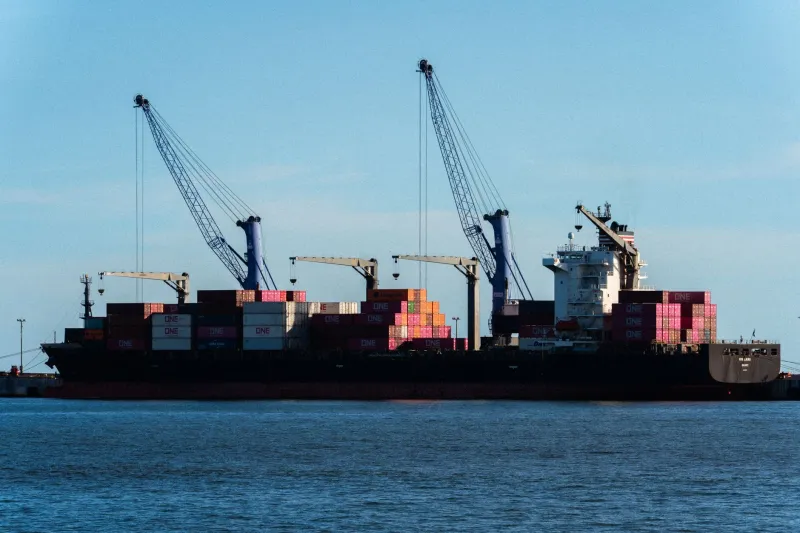
For the better part of three decades, the logic of global sourcing was largely self-reinforcing. Lower labor costs, established manufacturing clusters, and predictable shipping lanes made offshore procurement an easy calculation. Then came a sequence of disruptions—trade disputes, pandemic-era port gridlock, energy price shocks, and an accelerating political consensus around supply chain sovereignty—that have forced a genuine reconsideration of procurement geography.
The problem is that the reconsideration is often happening in a panic, and panicked procurement decisions are expensive ones.
This analysis is not an argument for wholesale reshoring, nor is it a defense of the status quo. It is an attempt to lay out the actual trade-offs with enough specificity to be useful to procurement leaders who are tired of being told to "diversify" without being told what that costs.
The Tariff Variable Is Not Going Away
US trade policy has become structurally less predictable than it was in the pre-2018 environment. Regardless of which administration occupies the White House, the political appetite for using tariffs as both a negotiating instrument and an industrial policy tool has proven durable across party lines.
For procurement teams, this creates a specific planning problem: landed cost calculations that were accurate six months ago may no longer reflect reality. A component sourced from a Southeast Asian manufacturer at an apparent 18 percent cost advantage over a domestic alternative can see that margin erode or invert within a single tariff cycle.
The practical implication is that any procurement geography decision made purely on today's pricing—without stress-testing against plausible tariff scenarios—is built on an unstable foundation. The cost of getting this wrong is not just the premium paid on affected goods; it is the operational disruption of scrambling for alternative suppliers mid-production cycle.
Nearshoring Is Not a Single Decision
Much of the public conversation around nearshoring treats it as a binary choice: offshore or near. In practice, it is a spectrum of options with meaningfully different cost and risk profiles depending on the product category, the required technical capability, and the buyer's tolerance for lead time variability.
Mexico remains the most discussed nearshoring destination for US manufacturers, and for legitimate reasons. USMCA trade terms, geographic proximity, and a maturing industrial base in sectors like automotive, electronics, and metal fabrication make it a credible alternative to East Asian sourcing for many categories. However, buyers should not assume that Mexican manufacturing capacity is uniformly available or that lead times are automatically shorter than offshore alternatives—in high-demand sectors, capacity constraints are real.
Canada is frequently overlooked in nearshoring discussions, despite offering significant advantages in specialized manufacturing segments including aerospace components, advanced materials, and certain chemical inputs. The absence of tariff friction under USMCA and the shared regulatory environment with the US make Canadian suppliers a lower-friction option than geography alone might suggest.
Domestic US sourcing has become more economically viable in specific sectors than it was five years ago, driven by a combination of automation investment, energy cost advantages in certain regions, and federal incentive programs targeting semiconductor fabrication, clean energy components, and advanced manufacturing. The pricing gap between domestic and offshore production in these categories has narrowed materially, though it has not closed uniformly.
A Scenario-Planning Framework That Actually Works
The goal of supply chain scenario planning is not to predict the future—it is to identify which decisions remain defensible across a range of plausible futures. For procurement geography specifically, a three-scenario approach provides a workable structure.
Scenario A: Tariff escalation Assume a 15 to 25 percent increase in tariffs on goods from your primary offshore sourcing regions. Recalculate landed costs under this assumption. Which categories flip from offshore-advantaged to cost-neutral or domestic-advantaged? These are your highest-priority diversification candidates.
Scenario B: Logistics disruption Assume a 6 to 10 week degradation in ocean freight reliability—not an implausible assumption given recent history. Calculate the inventory carrying costs and production risk exposure associated with extended lead times. Categories where a disruption of this duration would halt production or force emergency air freight deserve a geography review regardless of their current cost profile.
Scenario C: Currency and input cost volatility Model a 10 to 15 percent movement in the dollar against the currencies of your major sourcing countries, combined with a 20 percent increase in energy costs affecting manufacturing input prices. This scenario tests whether your apparent cost advantages are structural or merely a function of favorable macroeconomic conditions.
Categories that appear vulnerable across two or more of these scenarios warrant active sourcing diversification. Categories that remain cost-advantaged even under stress scenarios provide a rational basis for maintaining current sourcing geography—with appropriate contingency planning.
Where Domestic Alternatives Are Delivering Competitive Value
The reshoring narrative is often presented in aspirational terms that obscure where domestic alternatives are genuinely price-competitive today versus where they remain structurally more expensive. A clearer picture serves procurement leaders better than advocacy.
Precision machined components: Automation investment has substantially reduced the labor cost disadvantage of US machine shops in high-complexity, low-volume categories. For parts requiring tight tolerances or frequent design iterations, domestic sourcing often delivers better total cost when engineering collaboration time and rework rates are factored in.
Industrial fasteners and structural hardware: A combination of domestic capacity expansion and tariff pressure on imported fasteners has brought US producers to competitive price parity in standard specifications. Lead time advantages are significant.
Electronic assemblies and PCBs: Federal incentives tied to the CHIPS Act and related legislation are beginning to reshape domestic capacity in this sector, though full price parity with East Asian production remains a medium-term rather than near-term prospect for most buyers.
Specialty chemicals and industrial coatings: Supply chain disruptions have accelerated domestic investment in this sector, and for buyers with consistent volume requirements, long-term contracts with US producers are increasingly available at pricing that does not carry the historical premium.
The Cost-Honest Conclusion
Building procurement resilience against geopolitical disruption is a legitimate strategic priority—but it is not free, and the cost should be calculated honestly rather than absorbed implicitly through poor planning.
The buyers who will navigate this environment most effectively are those who resist both the inertia of "we've always sourced this way" and the panic-driven overreaction of wholesale geographic restructuring. A disciplined, scenario-tested approach to procurement geography—one that identifies where diversification pays for itself and where it represents a genuine cost premium worth accepting for strategic reasons—is the foundation of a resilient and financially responsible supply base.
The geopolitical environment will continue to generate surprises. The procurement organizations best positioned to absorb them are those that have already done the analytical work before the next disruption arrives.